Menopause is the permanent cessation of menstruation that results from the loss of ovarian function and therefore represents the end of a woman’s reproductive life. At the time of menopause the ovaries contain very few follicles; they have decreased in size, and they consist mostly of shrunken follicles, some interstitial cells, and fibrous tissue. Estrogen production decreases by 80 percent or more, and this, along with the loss of follicles, results in marked increases in the secretion of luteinizing hormone (LH) and follicle-stimulating hormone (FSH). Menstrual periods may cease abruptly or may be irregular for a year or so before ceasing. Similarly, menopausal symptoms may occur abruptly or gradually. While menopausal symptoms may begin when the woman is still menstruating, they are more likely to begin after menstruation ceases.
Stages of Menopause:
Natural menopause is the permanent ending of menstruation that is not brought on by any type of medical treatment. For women undergoing natural menopause, the process is gradual and is described in three stages:

1. Perimenopause or "menopause transition": Perimenopause can begin eight to 10 years before menopause, when the ovaries gradually produce less estrogen. It usually starts in a woman's 40s, but can start in the 30s as well. Perimenopause lasts up until menopause, the point when the ovaries stop releasing eggs. In the last one to two years of perimenopause, the drop in estrogen accelerates. At this stage, many women may experience menopause symptoms. Women are still having menstrual cycles during this time and can get pregnant.
2. Menopause: Menopause is the point when a woman no longer has menstrual periods. At this stage, the ovaries have stopped releasing eggs and producing most of their estrogen. Menopause is diagnosed when a woman has gone without a menstrual period for 12 consecutive months.
3. Postmenopause: This is the name given to the period of time after a woman has not bled for an entire year (the rest of your life after going through menopause). During this stage, menopausal symptoms, such as hot flashes, may ease for many women. However, some women continue to experience menopausal symptoms for a decade or longer after the menopause transition. As a result of a lower level of estrogen, postmenopausal women are at increased risk for many health conditions, such as osteoporosis and heart disease. Medication, such as hormone therapy and/or healthy lifestyle changes, may reduce the risk of some of these conditions. Since every woman's risk is different, talk to your doctor to learn what steps you can take to reduce your individual risk
Symptoms of Menopause:
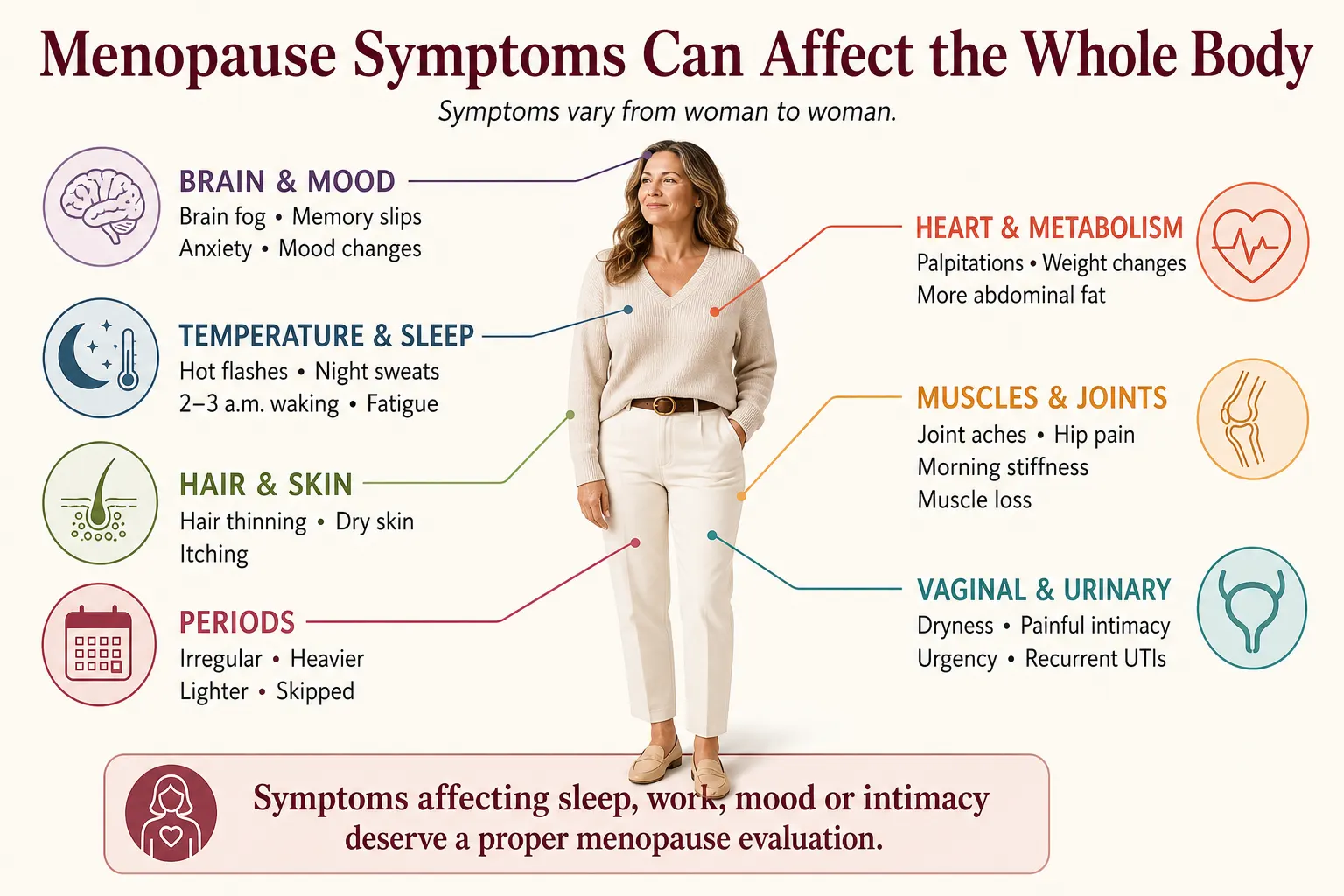
Symptoms of menopause can vary from one person to the next, and with over 30 symptoms, it’s clear to see why menopause is different for every woman. On this page, I take a look at the most common menopause symptoms, as well as other symptoms you might not be aware of. The most common symptoms you may experience in the lead-up to and during the menopause include:
-Hot flushes
-Night sweats
-Irregular periods (including heavy periods and period pain)
-Intimate body problems (including breast pain, vaginal dryness and loss of libido)
-Weight gain
-Mood changes (including anxiety, mood swings, low mood, stress and panic attacks)
-Joint pain & muscle pain
-Fatigue
Other less common menopause symptoms you may experience include:
-Sleep problems
-Digestive problems
-Bloating
-Nausea
-Headaches
-Itchy skin
-Bladder infection
-Weak bladder
-Hair loss
-Dry mouth
-Dry, tired, irritated eyes
-Brittle nails
-Difficulty concentrating
-Memory lapses
-Dizziness
-High blood pressure
-Irregular heartbeat
-Osteoporosis
It’s important to bear in mind that even if you are the ‘typical’ age, your symptoms may not be due to menopause
Ayurvedic view and Treatment options:
The Ayurvedic perspective on menopause is that it is a normal sign of aging and is known as the golden age. In Ayurveda, menopause is termed as “Rajonivritti”. The more balanced you are before you reach menopause largely determines how you will react to menopause. Eating a healthy diet and getting exercise provide a foundation for health and are two keys to being “in balance”. Menopausal symptoms vary from woman to woman; Ayurveda describes symptoms to different body types or doshas. The three types of doshas include Vata, Pitta and Kapha. If you have an imbalance in one of these doshas, you may experience the following menopausal symptoms:
-Menopause in Vata dosha: The symptoms here are : nervousness, anxiety, panic attacks, mood changes, vaginal dryness, loss of skin tone, cold feelings, irregular cycles, insomnia, constipation, palpitations, and body pains
-Menopause Pitta type: Women with this type of symptom tend to experience angry outbursts, irritability, hot flashes, sweating at night, urinary tract infections, skin rashes, and acne.
-Menopause Kapha type: Kapha menopause Symptoms are: weight gain, lethargy, apathy, fluid retention, fungal infections, laziness, depression, lack of motivation, slow digestion.
Ayurvedic Treatment:
Ayurveda can combat menopause without experiencing an increased risk for life-threatening diseases. The main goal of this combined approach is to alleviate symptoms and prevent/treat osteoporosis, cardiovascular disease, and other aging-related diseases.
In modern medicine, it is common practice to prescribe hormonal therapy for women during menopause. This therapy, however, does not affect all ladies equally, as each has a different constitution and lifestyle.
Unlike the medicine familiar to us, Ayurveda approaches it in a different way by preventing or reducing symptoms using herbs that rejuvenate the female reproductive organs. Unlike synthetic hormones, these herbs supply the body with natural precursors for the synthesis of estrogens and progesterone.
Many Ayurvedic herbs can help reinforce and rejuvenate the female reproductive system, normalize hormones, and balance emotions such as :
-Shatavari: Shatavari is a renowned tonic for the female reproductive system and contains natural precursors to female hormones that help to balance hormones and reduce menopausal symptoms. It is also naturally cooling and moistening to the reproductive tract, making it perfect for the hot, dry symptoms of menopause whilst also boosting libido.
-Ashoka: It is used for menopause symptoms, menstrual pain, and abdominal cramps. It has a soothing and analgesic effect.
-Brahmi: Brahmi is very helpful not only in menopause but also in many other diseases. It reduces hot flushes, joint pains, palpitations, and mood swings.
-Turmeric: It helps in the circulation of key minerals to muscles and also helps to reduce inflammation in body parts
-Tagar: This plant harmonizes mental and emotional imbalances and is used in Indian medicine as a sedative
-Licorice: It helps to reduce gastric symptoms, fatigue, hot flushes, and mood swings
-Amalaki: Amalaki rejuvenates and restores, improves immune powers, purifies blood, and suppresses inflammation.
-Ashwagandha: Ashwagandha improves physical strength, physical endurance capacity, stamina, vigor, and vitality. It is also very beneficial for lower backache, insomnia, depression, and anxiety.
/assets/images/provider/photos/2741036.jpg)
Disclaimer : Sandeep Kumar and Anupam Vasudeva are not GP, they have Ayurveda medical degree from India where it is considered equal to any other medical degree. This qualification is recognized in Australia by vetassess governing body as Complementary Health Therapists. Life Line Ayurvedic Herbal Clinic does not claim to cure a disease or terminal illness and does not create any unreasonable expectation of beneficial treatment. Ayurvedic medicines and treatments are generally considered to be safe but rarely may be associated with possible adverse reactions in individual cases. We recommend seeking urgent medical attention in the case of an adverse reaction. This website provides you with information. You must contact your Ayurvedic or another health professional before you apply them. Full Disclaimer